


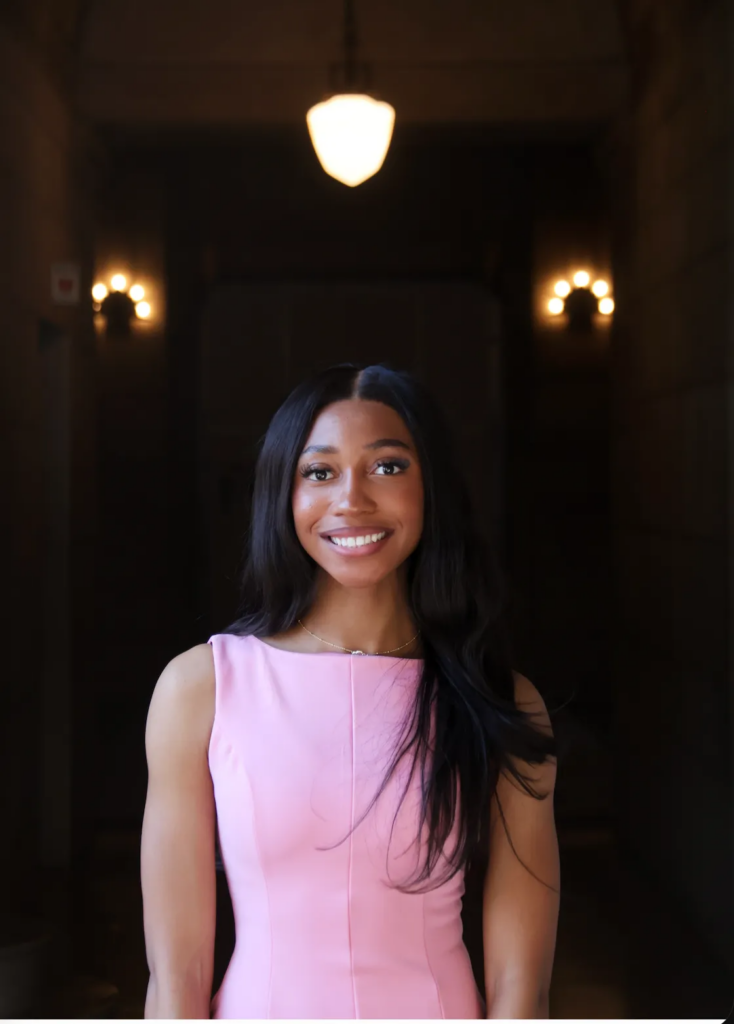
Caroline McDonald
Lincoln, NE
Caroline is a passionate leader, strategist, and advocate for equitable technology. I am a student at the University of Nebraska–Lincoln, majoring in business and law with minors in political science and computer science.
Throughout high school, I took on multiple leadership roles, founding and leading the Model Congress Club, serving as vice president of the Diversity Board, and being elected three times as a Student Body Representative. As co-captain of the Debate Team, I strengthened my ability to analyze complex issues and made history as Nebraska’s first Black state champion in Lincoln-Douglas Debate. I was also able to participate in other DEI cohorts and civic engagement programs such as Nebraska Civic Engagement Table’s Youth Lobby School.
Currently, I am the president of the Freshman Action Team, spearheading events for the well-being of freshmen on campus. I am working alongside young professionals to launch a Black Career Fair in May. Additionally, my university involvement includes the UNL Debate Team and an internship with Launch Leadership.
I am dedicated to the intersection of law and cybersecurity, striving to advocate for ethical tech policies and combat algorithmic bias and digital inequities. My goal is to shape responsible AI governance and legal standards in emerging technology, particularly within government systems. With this mission in mind, I plan to pursue a law degree specializing in cybersecurity.
Lupita's Civic Action Plan:
Laura, Lupita, and Muatasim are working together on a yearlong process of community engagement starting from their own networks. Their aim is to inform, listen and empower community members so they can participate in the 2026 elections in a way that is accessible and community led.
How can we ensure our neighbors are informed about what’s going on in their community? How can we help them feel confident to be involved and share their experiences with elected representatives?
The process begins through listening sessions to hear from neighbors about what they’re experiencing, what they need, and what they would change. From there, the group follows up with information and advocacy workshops that address what they’re able to address based on what they heard during each listening session. Finally, the group aims to convene a nonpartisan candidate panel and invite every community member they’ve spoken with to attend and hear from city-level candidates before the election.
The goal is to make sure community members feel informed, heard, and supported so they can take part in the 2026 elections. It’s important that this work stays nonpartisan, easy to understand, and truly led by the community. The hope is to build a community that feels more confident and involved. That starts when people understand what’s going on locally, know how to be part of the process, and feel like their voices and experiences actually matter in shaping decisions.
It begins by listening first and creating spaces where people can share their thoughts and experiences. From there, it’s about breaking down civic information in a way that’s clear and accessible. We can then bring people together to talk through issues, connect them to bigger systems, and support them in coming up with their own questions. Creating opportunities to engage with candidates is key, but it’s just as important to keep that connection and accountability going even after the election is over.