
CIVIC ACTION
Community engagement takes many forms: volunteering, donating to local causes, working with neighbors, attending public meetings, joining groups, and taking on local leadership roles, to name a few. Taken together, these actions paint a picture of how connected and invested people are in the places they live. When these activities are strong, they go beyond mere participation figures. They reflect a sense of deep ownership, shared responsibility, and a community’s ability to solve problems and care for one another.
THE VOTING BENCH
During the 2020 Presidential Election, when the world felt especially heavy and divided, Mary Beth Rice of Lincoln decided to do something light. Out by the public sidewalk in her front yard, she placed a small bench with a basket of rocks and a simple sign: Vote.
The choices were playful: chocolate vs. vanilla, sunrise vs. sunset, Husker football or Husker volleyball. Each rock cast a vote. No campaigning, no arguments, just a little joy. She snapped a photo, posted it to Facebook and Instagram and labeled it “Mail-In Voters,” and went about her day.
To her surprise, the votes rolled in. Walkers of all ages stopped to participate. Middle schoolers, elderly couples, even the neighborhood nuns took part. Families paused and debated. Runners rerouted just to cast their rocks.
When the basket emptied, the results were tallied and announced online. There were no hard feelings – just smiles (and maybe a little friendly banter).
What began as a spontaneous act of connection has endured. Five years later, the Voting Bench still stands. Mary Beth sometimes considers retiring it, but then a neighbor stops her at the mailbox to suggest new options. Someone else leaves slips of paper on her door with ideas for the next vote.
Parents bring their kids to take part. It’s become a tiny tradition, and a meaningful one.
Building community doesn’t require a grand plan. In this case, it only took a bench, a basket, and an open heart.
“It costs nothing, really,” she said. “But it lifts hearts.”
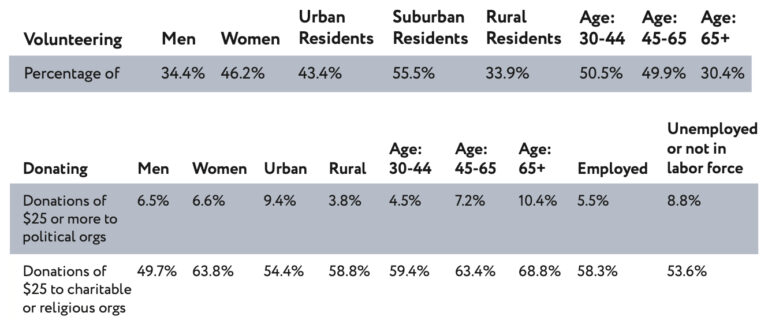
Nebraskans stand out nationally in volunteering, with 40.3% of respondents reporting they gave their time to a cause. That’s well above the national average of 28.3%, placing our state third overall. Encouragingly, this trend is on the rise. Volunteering has notably increased among Nebraskans aged 30 to 40, who saw a 12.5% jump, and those aged 45 to 65, with a 7% increase. Suburban households led the way, with a 19.3% growth in volunteerism from 2021 to 2024 – almost the reverse of a downward trend from 2017 to 2021.
The story around charitable giving is more complex. Donations in rural communities to religious or charitable organizations declined by 22.3%, while urban areas saw a 13.3% drop. In 2023, Nebraska ranked 14th nationally in donations of $25 or more to charitable or religious organizations but just 32nd in donations to political organizations. These shifts suggest that while time-based engagement is strengthening, financial support, particularly in rural areas, is an area to watch as communities evolve.
HOMETOWN INTERNS
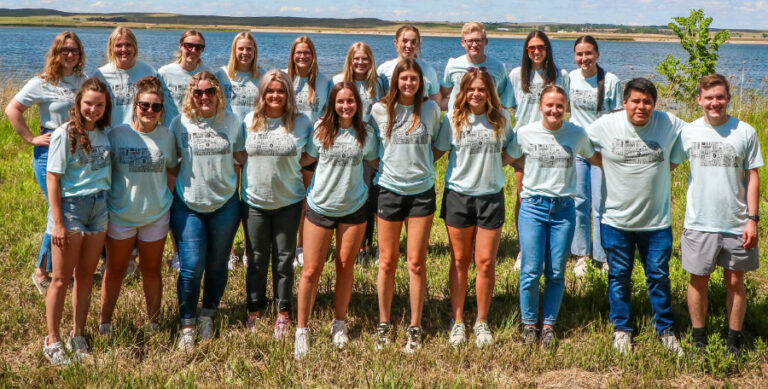
In small towns across Nebraska, many young adults are finding their way home – literally and figuratively – through a program from the Nebraska Community Foundation. The Hometown Internship places college students in their hometowns each summer to work on meaningful, locally driven projects. Unlike traditional internships, these students are given freedom, leadership roles, and the chance to shape their communities’ futures.
Now in its fifth year, the program has hosted 95 interns across our state. Some have since returned permanently, buying homes, starting families, launching businesses, and joining community leadership boards.
Former interns like Dakota Cherney, Paige Hansen, and TK Hergott – dubbed the “Thayer County Three” – never imagined moving back, but their internships showed their hometowns in a new light. That brought opportunity and a sense of purpose.
Jadyn Schultis of Diller co-founded a youth leadership camp. Mariah Sliva and Hannah Miller launched a video storytelling project in Shickley. Others, like Rachel Orth, wrote “love letters” reflecting on how their views of rural Nebraska had changed from so-called flyover country to vibrant, possibility-filled communities.
At its core, the program builds confidence in young people and the communities it serves. Interns often return home as changemakers, helping long-time residents see overlooked assets and imagine new futures. And our towns learn that when young people are invited in and empowered, they stay and lead.
Political involvement includes casting a ballot, of course. But it goes well beyond that basic civic duty. It includes staying informed, engaging in political discussions, and communicating with public officials. These individual and collective actions are essential to the health of our representative democracy. When citizens participate by voting or talking with others about political issues, they help shape decisions affecting their communities. Without active and informed engagement, the system can’t function as intended.
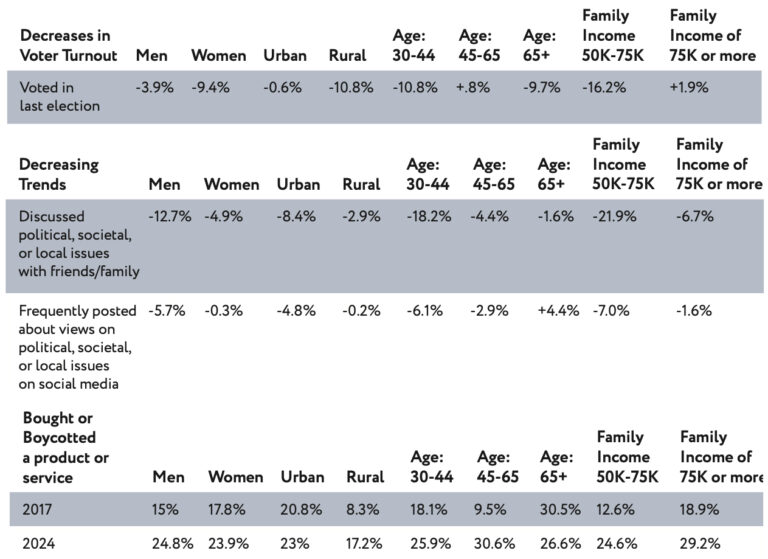
Recent data reveals shifting patterns in political involvement across Nebraska. While the state ranked eighth nationally for voting participation in the last local election, overall turnout is declining, especially among certain groups. From 2021 to 2024, male turnout dropped by 3.9%, while female turnout decreased by 9.4%. Only voters aged 45-65 showed increased participation, with turnout down for younger and older groups.
Geographic and economic differences are notable. Urban areas saw minimal change, but rural voter turnout fell 10.8%. Middle-income earners ($50,000 to $75,000) experienced a sharp 16.2% vote rate drop.
Other indicators of political engagement also show a decline. Fewer Nebraskans are discussing political and societal issues regularly. This trend is strongest among men and those aged 30-44, with discussion down 17.2%, and among middle-income residents, down 21.9%. These drops continue a pattern first seen between 2017 and 2021.
Online political activity is also decreasing. Social media posts about politics, particularly among younger men, fell dramatically, from 9.2% in 2021 to 3.5% in 2024.
However, political identity is showing up in new ways, particularly in economic behavior. Boycotts are rising, with nearly a quarter of Nebraskans reporting participation, up significantly from 2017. The data suggests that while traditional political involvement is down, especially among rural and middle-income residents, Nebraskans find new, more personal ways to express their political values.
TWIN RIVER, SINGLE VOTE
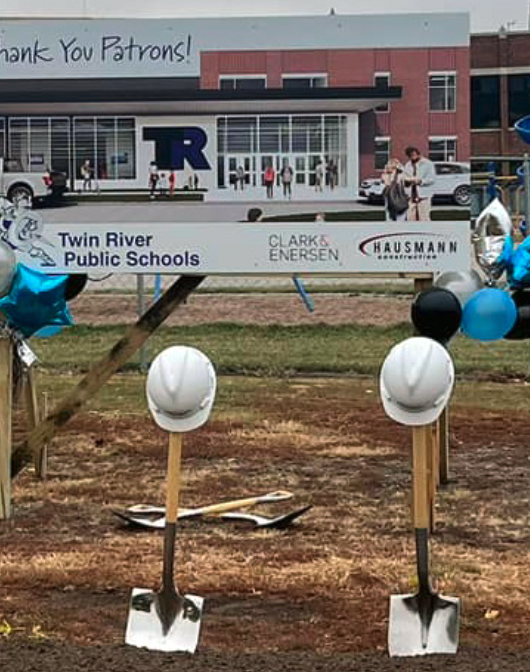
In May 2024, the Twin River School District voters approved a major facility upgrade, which provided a powerful reminder of just how much one vote matters.
In the May primary election, a $39.9 million bond measure passed by a single vote — 523 in favor and 522 against. That single ballot activated a community-wide effort to improve the daily experiences of hundreds of area students. The school district’s voters from Nance County played a decisive role, backing the bond 359-152.
In contrast, voters in Merrick, Platte, and Polk counties opposed the measure by a combined 370-164.
Significant change is already underway. The $39.9 million bond supports a new 96,060-square-foot school building on the existing site, replacing the aging school built in 1929. The project also includes updates to the elementary wing, another building, and the school’s current gym while adding new classrooms, including expanded CTE, agriculture, family and consumer science, and art rooms.
The plan includes a new gym, wrestling room, weight room, and secure main entrance. The building layout also clearly separates elementary and high school students and provides more centralized, shared spaces.
The bond gives the district facilities that will help kids be successful, Twin River Board of Education President Jennifer Swantek said. And it’s all because of one vote.