A blue image with a logo in the shape of Nebraska. The words inside say THE STATE OF CIVIC LIFE.

CIVIC TRUST

Social connectedness in Nebraska is a cornerstone of our civic life, reflecting the strength of our relationships with family, friends, and neighbors. In both rural towns and urban neighborhoods, Nebraskans tend to show up for one another — whether through community events, volunteer efforts, or everyday acts of kindness. These personal connections foster a sense of belonging and mutual support, which in turn helps build stronger, more engaged communities across the state.

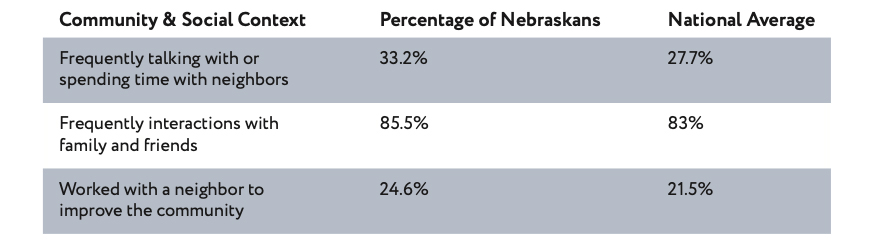
Nebraskans continue to maintain strong interpersonal ties, especially with family and neighbors. According to the most recent data, 33.2% of Nebraskans report frequently talking with or spending time with their neighbors, ranking the state sixth in the nation. Nebraskans also report high levels of regular interaction with family and friends, with 85.5% doing so frequently compared to a national average of 83.0%, placing the state 14th nationally.

Regarding working with neighbors to improve the community, 24.6% of Nebraskans reported doing so in the past year, which is above the national average of 21.5% and ranks Nebraska 13th nationally. These community-driven actions reflect a culture of collaboration and a strong sense of local responsibility.

However, some areas of concern have emerged. While neighborly interaction remains relatively high, the percentage of Nebraskans who frequently do favors for neighbors (9.0%) is slightly below the national average (10.4%), ranking Nebraska 41st. Still, this figure represents a 4.0% increase from 2021 to 2024, indicating a rebound in this type of everyday support.

TREE CAREGIVERS

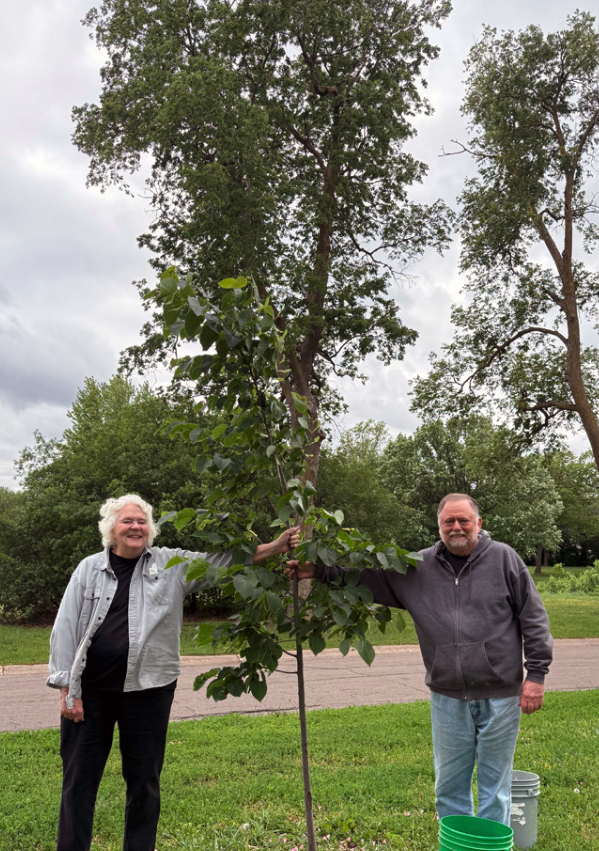
Most days, no one sees Karna Cronn hauling water to four young trees near the Antelope Park bandshell. But she’s been their quiet, steady caretaker for two summers now. Unless the rain gauge shows at least an inch, Karna faithfully delivers two five-gallon buckets to each tree every week. Her simple ritual has helped the saplings take root, and shows that small, consistent acts can make a big difference.

Sam Packard knows this, too. With a weathered pickup and a 125-gallon tank in the back, Sam makes three to four trips a week to water newly planted trees in Lincoln’s Antelope, Irvingdale, Rudge, and Cooper parks. His method is efficient and patient: a bucket relay system, where each tree gets a slow, deep drink through tiny 5/16-inch holes in the bucket — fifteen gallons per tree and no shortcuts.

Together, Karna and Sam represent a kind of quiet heroism: neighbors who show up for the living things that can’t ask for help. Thanks to these two Lincoln residents, dozens of young trees across the city have a much better chance to thrive.

Karna and Sam would probably shrug off any praise. But their steady stewardship adds beauty, shade, and life to Lincoln’s shared spaces. We’re reminded that building a better community doesn’t always look dramatic.

Confidence in institutions shapes people’s willingness to engage with them. When Nebraskans trust that their institutions – such as our unique unicameral Legislature, our public schools, our hospitals, our local and regional media, or area businesses – are fair, responsive, and practical, they’re more likely to participate in (and invest in) them. High confidence signals a belief that these institutions serve the public good and can be relied on to do their job well.

Confidence in institutions plays a significant role in how individuals engage with their communities and participate in public life. In Nebraska, particularly in rural areas, perceptions of institutional effectiveness and power have undergone notable shifts over the past five years.

According to the Nebraska Rural Poll, feelings of personal powerlessness among rural residents have grown steadily. In 2019, 24% of respondents agreed or strongly agreed that they felt powerless to affect the direction of their communities. By 2024, that number had climbed to 40%. At the same time, most rural Nebraskans reject the idea that their communities are powerless. In fact, 58% say they disagree or strongly disagree with the statement that their community cannot control its own future. This distinction suggests that while individuals may feel personally disconnected from larger systems, they still believe in their towns’ collective strength and resilience.

Trust in leadership also varies by scale. Over 60% of rural Nebraskans believe local leaders are at least moderately effective at overcoming differences to solve problems. In stark contrast, only 9% feel the same about national leaders. This local trust likely contributes to stronger civic bonds and a willingness to engage locally, even as faith in national institutions remains low.

Regarding government services, 42% of rural respondents report being satisfied with their local government. Residents living in or near larger communities tend to have better access to needed services, while those in smaller communities report higher levels of emotional attachment and sense of belonging.

Modes of civic interaction reflect moderate engagement. Between 10 and 14% of Nebraskans report attending a public meeting or contacting a government official. Meanwhile, nearly one in four residents have expressed political or social views through their economic choices, such as boycotting or buying specific products. These alternative forms of participation suggest that while formal institutional engagement may be limited, many Nebraskans are still finding ways to make their voices heard.

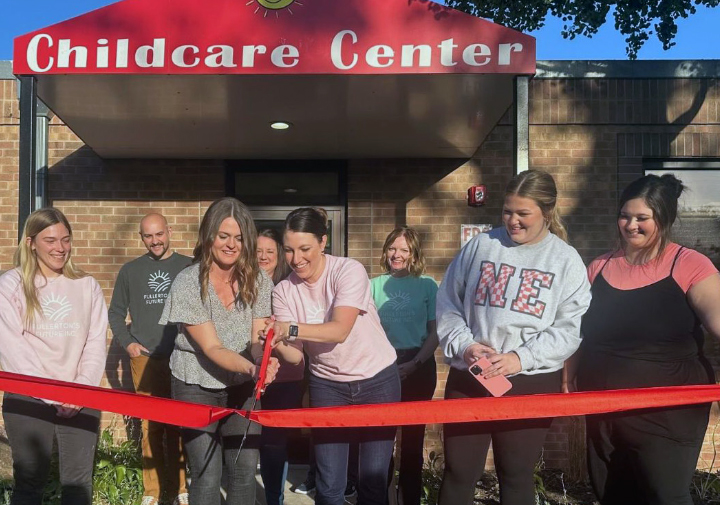
FULLERTON'S FUTURE

In Fullerton, something powerful is taking root: a steady, community-driven movement quietly restoring confidence in local institutions and strengthening civic life.

At the center of this momentum is Fullerton’s Future, a nonprofit founded to meet local families’ needs through a new childcare and preschool facility. It has since become a rallying point for residents, businesses, churches, schools, and young people to invest in their community – demonstrating that when guided by trusted neighbors and shared purpose, local institutions can meet real needs and create lasting impact.

Support for Fullerton’s Future has come from across and beyond the town. A $20,000 grant from Cargill’s Cares Council significantly boosted the project, followed by contributions from a local law firm, a church cookie walk, an insurance agency, and even a group of sixth graders. These acts of generosity show how confidence grows when people see their efforts become visible results.

Each step has invited deeper engagement. The community celebrated at a ribbon-cutting and open house. Sunday School children made the project their Lenten focus, learning that their actions matter. When a longtime educator retired, Fullerton’s Future preserved her legacy by purchasing the contents of her preschool, ensuring continuity for the next generation.

The organization has been open and responsive, answering community questions, sharing updates, and encouraging participation. Through FAQs, partnerships with Fullerton Public Schools, and collaboration with the city, Fullerton’s Future models inclusive, transparent leadership. Though the center is private and independent, its close ties to public institutions strengthen the town’s civic fabric.

This is a story of renewed trust. Fullerton shows what’s possible when people believe in one another and the institutions they create together. One act of trust at a time, the town demonstrates how local voices can rebuild infrastructure and foster belief in one another, as well as the power of community.