
What?
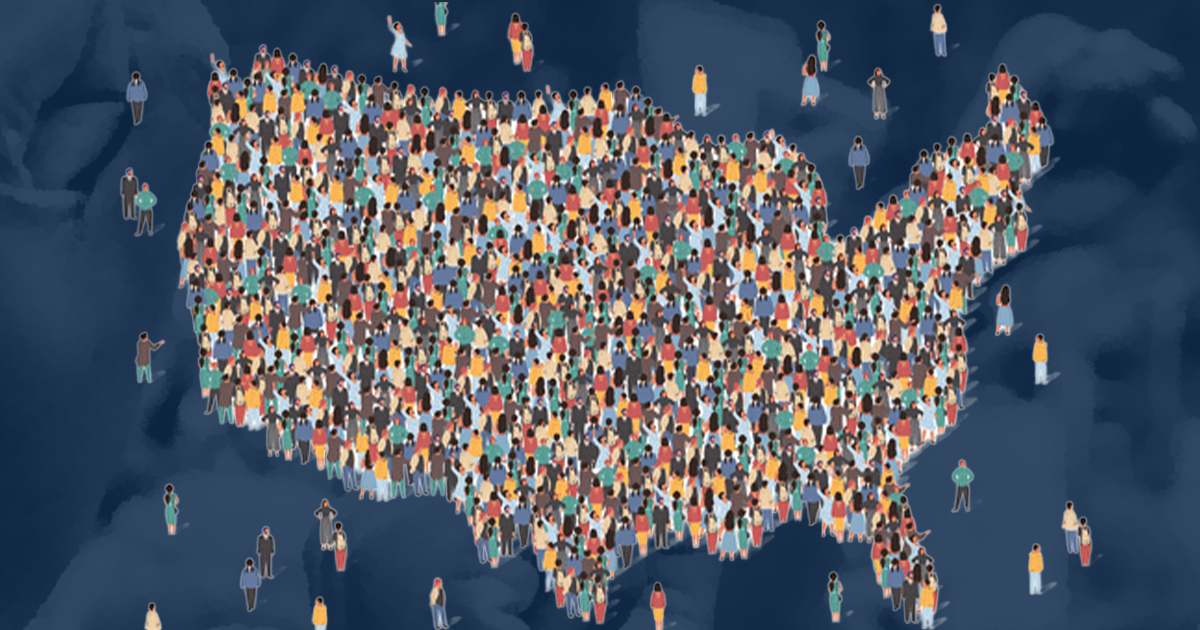
On Aug. 7, President Trump announced that he was seeking to fundamentally alter the way the United States counts its population — and, by extension, how political power and federal resources are distributed in the next decade. The president ordered the U.S. Commerce Department to initiate a new, mid-decade census that would exclude undocumented immigrants entirely, counting only U.S. citizens.
This marks a return to (and escalation of) his 2019 attempt to add a citizenship question to the 2020 census, a move the Supreme Court rejected because it would undermine the count’s accuracy. This time, the administration is bypassing that fight and going further: removing non-citizens from the population count altogether. The president has publicly framed this as a matter of fairness to citizens. Still, constitutional scholars, data experts, and civil rights organizations immediately recognized it for what it is: a direct challenge to the plain language of the 14th Amendment, which requires congressional apportionment to be based on “the whole number of persons in each state.”
The framers of that amendment considered – and rejected – limiting apportionment only to citizens. They guaranteed representation for everyone who lives in this country, regardless of citizenship status. Now, more than 150 years later, that principle is being tested in a way not seen before.
So What?
The census is one of the few democratic rituals written directly into the Constitution. It is designed to ensure equal representation and to guide the distribution of trillions each year in federal funds for schools, hospitals, infrastructure, emergency services, and more. Every community – rural and urban, large and small – depends on accurate census data to plan local services, attract investment, enforce civil rights protections, and ensure fair political representation at every level of government.
Excluding non-citizens from the census would cause a cascade of harm, starting with a severe undercount that would not only affect immigrant families but also distort the data that every community relies upon. That distortion would lead to fewer federal dollars for states like Nebraska, where even small population shifts can have an outsized effect. Nebraska ranked 37th in population in 2020, and we already walk a fine line in securing our fair share of resources.
If non-citizen residents are erased from the count – and therefore from the formulas that determine funding – the Cornhusker State would lose out, year after year. The loss would show up in classrooms with too few teachers, in roads that go unrepaired, in hospitals that lack adequate equipment, and in emergency services stretched beyond capacity.
Of course, Congressional representation is determined by population, which is why the president and his staff seem so interested. Second, without an accurate census, our ability to enforce voting rights, civil rights, and fair housing laws would be weakened. And finally, public planning would be based on faulty numbers, leaving communities to make critical decisions in the dark.
But at its core, this effort is a threat to the integrity of one of our oldest democratic processes. The census has always been conducted without regard to citizenship, precisely because it is meant to count the whole population. Politicizing it now erodes public trust and sets a dangerous precedent: that the government can redefine who “counts” in America simply for partisan advantage.
Now What?
The president’s order will almost certainly face legal challenges. Civil rights groups, states, and local governments are already preparing legal action if and when necessary, arguing that the plan violates both the Constitution and the Census Act. These cases will likely seek immediate injunctions to halt any attempt to carry out a citizen-only census. If history is any guide, the courts will block the order, as they did with the citizenship question in 2020. But the legal fight will be hard-fought, and the outcome is not guaranteed.
Lawmakers can also refuse to fund a citizen-only census, and can even go a step further by passing legislation to reaffirm that all residents must be counted. This will require political courage, but it is essential to protect both the letter and the spirit of the Constitution.
For Nebraskans, the stakes are high. In 2019, Civic Nebraska helped form and lead the statewide Nebraska Counts coalition to ensure that every resident was counted. That work paid off, protecting our representation and our share of federal resources. Now, the threat is back, and it is even more serious.
We must be vigilant, informed, and ready to speak out. The courts may act, Congress may intervene, and the administration may have to walk back its plan. But those outcomes are far from assured. They depend on sustained public pressure, and constituents making clear that this is a line we will not allow to be crossed.
