
If your image of your fellow Americans comes mostly from your phone or your TV, then you may subscribe to the notion that the country is hopelessly divided. Why wouldn’t you? Headlines scream conflict, comment threads burn white-hot with outrage, and every issue – Every. Last. Issue – gets flattened into a culture-war flashpoint.
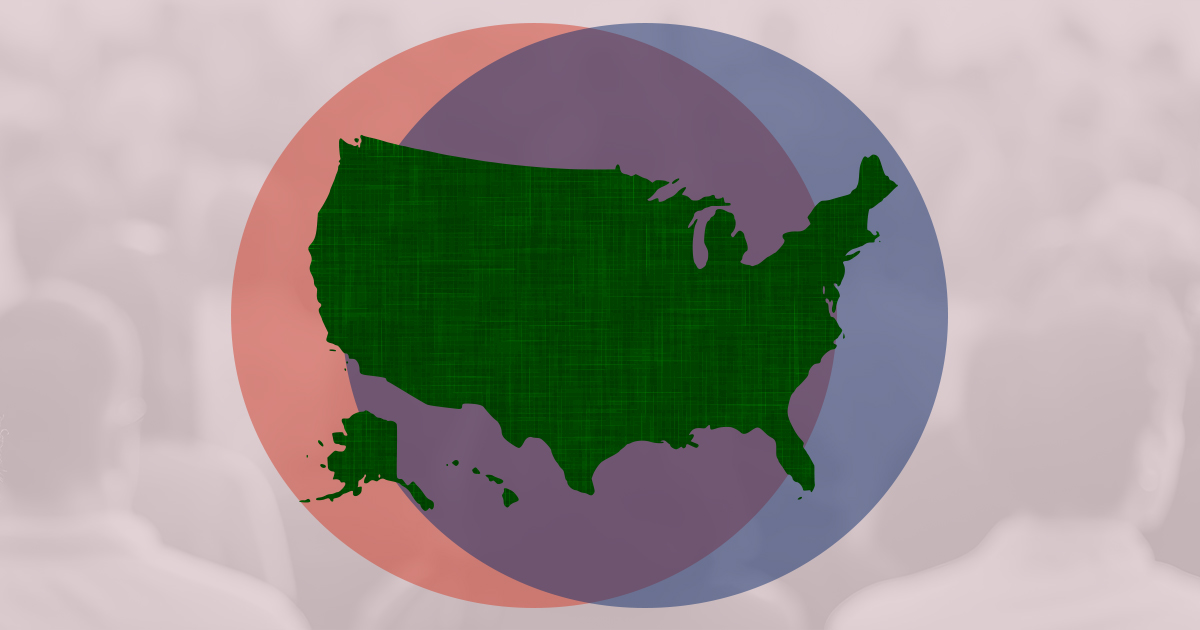
And yet, beyond the “engagement”-driven feeds and attention-grabbing news scrolls, a quieter, more encouraging story is unfolding, one that shows Americans are not as far apart as we’re made to believe. In fact, we’re far more alike than we are different.
Over the past year, more than 700 examples of cross-partisan agreement have been identified by AllSides and More Like US, and compiled into a powerful resource called Similarity Hub. The online tool organizes public opinion data from trusted pollsters, such as Gallup, Pew, and YouGov, into more than 20 issue areas, including abortion, immigration, elections, the Middle East, and media bias.
A clear pattern emerges: Supermajorities – not just majorities, supermajorities – of Americans agree on far more than the screaming heads and social feeds want us to.
Since its launch, Similarity Hub has been recognized as a tool in correcting the Perception Gap, a term coined by More in Common to describe the dangerous tendency of Americans to assume that members of the opposite political party are more extreme than they actually are.
That notion, fueled by sensational media and algorithmic feeds, only serves to mislead us and harden our positions. Worse, it drives partisan animosity and, increasingly, justifies anti-democratic behavior under the false premise that we are in a zero-sum battle.
So the issue isn’t that Americans don’t agree on everything. It’s that the things we do agree on are rarely amplified.
John Gable, CEO and co-founder of AllSides, puts it plainly: “Politicians and news media … mislead us into thinking that there is no common ground and that the other side is radically different from us. That is just wrong. By showcasing how much we agree, AllSides and More Like US combat misinformation and false belief, and give us all the ability to better understand reality and come together to solve problems,” he told The Fulcrum.
Encouragingly, bridging this perception gap has proven effective. In the Strengthening Democracy Challenge, a nationwide experiment led by Stanford U., interventions that corrected misperceptions about political opponents were among the most successful in reducing anti-democratic attitudes, support for political violence, and partisan hatred.
Still, agreement alone won’t change our trajectory. As a nation, we’ve grown addicted to righteous outrage. The dopamine rush of dunking on “the other side” has overtaken our capacity to coexist. Similarity Hub gives us reason to hope – but hope, like democracy itself, only works when we act on it. If we want a healthier civic life, we must start incentivizing connection over conflict and reality over spectacle.
At Civic Nebraska, we believe the work of democracy is grounded in this kind of sober, hopeful realism. We encourage you to explore SimilarityHub.org, share it with others, and consider how your own perceptions might shift when you see the full picture.
Common ground is not only possible – it’s already here. It’s time we acted accordingly.

Thanks to AllSides and More Like US for sharing this research.