
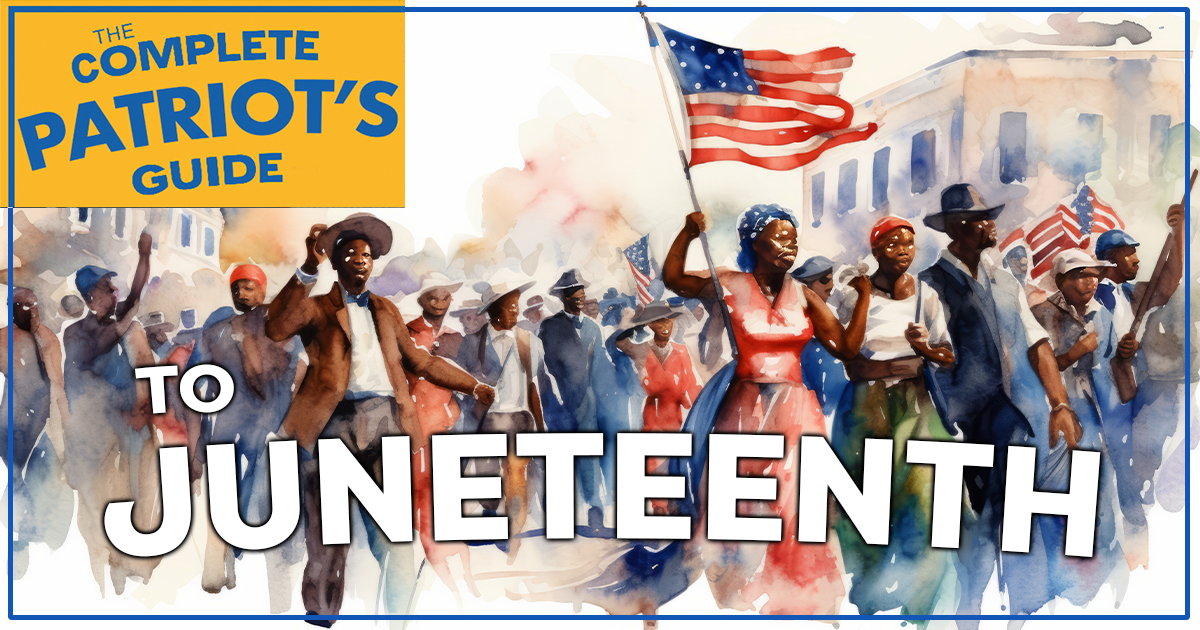
Every June 19, Americans gather to celebrate Juneteenth, a barbecue-filled, music-blessed, storytelling kind of holiday that reminds us freedom, like a good potluck, doesn’t always show up on time.
Juneteenth has become the most well-known commemoration of the end of slavery in the United States. Some even call it our second Independence Day. And while that sounds tidy and celebratory, the truth is anything but. It’s more of a jagged timeline, full of stops, starts, and long, painful delays. In other words, it’s very American.
So, let’s rewind. It’s June 19, 1865, in Galveston, Texas. Maj. Gen. Gordon Granger arrives with 2,000 Union troops and posts General Order No. 3, announcing that “all slaves are free.”
The order wasn’t news to the rest of the country: The Emancipation Proclamation had been signed more than two years earlier. But Texas, out there on the western edge of the Confederacy, hadn’t gotten the memo – or rather, plenty of people there worked very hard to avoid getting the memo. Texas had become a refuge for Confederates who hoped to cling to slavery a little longer. And they did, until the Union Army showed up to say otherwise.
When that news finally reached the estimated 250,000 people still enslaved in Texas, it was received with shock and disbelief, which then gave way to joy. People took to the streets, held impromptu services, and embraced each other. The day would become known as Juneteenth.
Living up to the promise?
Of course, emancipation didn’t mean instant transformation. As historian Erin Stewart Mauldin notes, Juneteenth is neither the beginning nor the end of something. Freedom didn’t roll in like a freight train; it sputtered into the station like a misfiring engine. For many newly freed people, the next day looked suspiciously like the one before it: No land, no money, no protection, and no clear path forward.
Some stayed where they were, now technically “free.” They entered into contracts – if you can call them that – to work the same land under the same people who had enslaved them. But plantation owners, for some strange reason, weren’t very excited about having to start paying wages. Most Confederate states were broke, and even where Union policies required payment, enforcement was spotty. Slavery was officially over, but systems of exploitation stayed very much alive.
Enter: sharecropping. Under this arrangement, formerly enslaved people would farm the land in exchange for a share of the crop at harvest time. Some eventually earned enough to make their own choices – what to plant, which livestock to buy, even whom to hire. But many remained stuck in debt. Sharecropping, as it turned out, had plenty of fine print, and it almost always favored the landowner.
That’s the thing about freedom in America. Many haven’t gotten it handed to them in a tidy basket with a ribbon on top. They’ve pushed, they’ve scraped, they’ve organized, and sometimes, they’ve danced in the streets when the needle moves, even just a little.
The joyful and dangerous act of being free
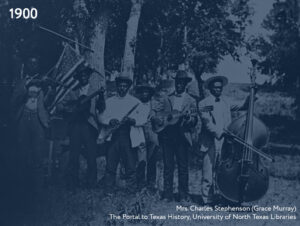
The first official Juneteenth celebrations began in 1866. Communities came together for food, music, prayer, and political education. People wore their best clothes. They read the Emancipation Proclamation out loud. They gathered in churchyards and back fields. It was history-making in real time.
White society didn’t exactly roll out the welcome wagon. Public parks were closed to Black communities during Juneteenth. In response, they bought land of their own. One of the most famous examples was in 1872. Four Black men in Houston (Rev. Jack Yates, Richard Allen, Richard Brock, and Elias Dibble) led a community campaign to buy 10 acres of land for Juneteenth celebrations. That land became Emancipation Park. Back then, it was a declaration: We will not be erased. Today, it’s a landmark.
Over the decades, as African Americans migrated across the country, Juneteenth traveled with them. Holiday observances popped up in Black communities in places like Los Angeles, Chicago, and Kansas City. Still, it remained below the radar for most Americans. Public schools skipped it, mainstream media ignored it, and even the federal government kept it at arm’s length.
It was never easy. For decades following emancipation, African Americans faced terroristic racial violence from the white populace. The months following freedom were marked by widespread brutality targeting Black people who dared claim their freedom. Freedmen’s Bureau reports document notorious incidents across the South, everywhere from Texas to Georgia and Virginia, with white mobs attacking, kidnapping, whipping, or murdering formerly enslaved people simply for attempting to leave plantations, demand payment, or seek fair labor contracts.
Two of the most infamous events occurred in 1866, in Memphis (May 1-3) and New Orleans (July 30). White residents and Memphis police, in some cases incited by local authorities, launched a three‑day campaign of arson, rape, robbery, and murder against Black soldiers and civilians. In New Orleans, a peaceful gathering of Black Republicans and freedmen devolved into what contemporaries called “an absolute massacre.” In two hours, a white mob, many of them ex‑Confederate veterans joined by authorities, opened fire and killed dozens.
Anyone with a passing knowledge of U.S. history knows this was not uncommon in the Reconstruction-era South. Untold thousands of Black Americans were lynched between the late 1800s and mid‑20th century, public acts of terror that reinforced white dominance and chased Black people out of communities across the country. For many newly freed men and women, the promise of Juneteenth existed side by side with terror, and celebrations often unfolded in the shadow of violence that threatened any Black person bold enough to claim autonomy, land, or the power to vote.
That context – joy dancing beside fear – is essential to understanding the resilient spirit of the holiday.
The long march forward
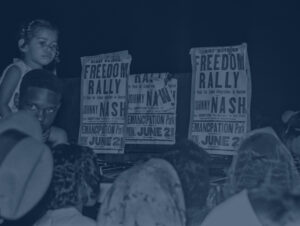
During the Civil Rights era, Juneteenth got a second wind. On June 19, 1968, just weeks after the assassination of Dr. Martin Luther King Jr., thousands marched on Washington for Solidarity Day, part of the Poor People’s Campaign. The date wasn’t a coincidence: It was a call to remember that freedom without economic justice is a half-built bridge.
Texas officially recognized Juneteenth as a state holiday in 1980, the first state to do so. Slowly, others followed. Activists like Opal Lee, a retired schoolteacher, took it national. She walked from Fort Worth to Washington, D.C., campaigning for Juneteenth to become a federal holiday.
The Juneteenth flag, with its bold red and blue fields split by a white arc and centered star, was first created in 1997 by activist and educator Ben Haith. Designed to reflect both the past and the promise of freedom, the flag’s central white star represents Texas and also nods to the freedom of all Black Americans across the United States. The surrounding starburst symbolizes a new beginning, while the sweeping arc evokes a new horizon, suggesting the forward motion of justice and progress.
Then came 2020, a pivotal year in our nation’s history. In the wake of George Floyd’s murder by police and the mass protests that followed, Americans, many for the first time, began to ask fundamental questions about racial justice, policing, and the legacy of slavery. Juneteenth took center stage; a year later, President Joe Biden signed the Juneteenth National Independence Day Act, making it a federal holiday.
A party, and a protest
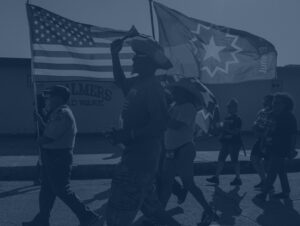 So now Juneteenth is official. But what does that mean?
Juneteenth, like many things in America, carries tension. It’s a party and a protest; a remembrance and a demand. It marks freedom delayed, yes, but also freedom enforced by Black communities who refused to forget.
This holiday doesn’t tie things up with a bow. It calls us to recognize the messy truths about how progress actually happens: through struggle, resistance, setbacks, organizing, and relentless hope. Celebrating Juneteenth means honoring that fight and holding space for truth-telling and joy-telling (sometimes in the same breath). It means knowing that while slavery ended, the systems that supported it mutated into Jim Crow, voter suppression, mass incarceration, and economic exclusion.
It also means showing up, not just for the parades and performances (though those are great), but for the education, reflection, and investment in Black communities. Not to mention for the honest conversations many Americans have been conditioned to avoid.
Juneteenth helps us talk about the long, unfinished arc of emancipation. Not just the day someone read an order on a Texas balcony, but the generations of people who made that order mean something. The people who built churches, schools, and businesses, who led marches and legal fights, who taught children to be proud, and who held the memory of freedom when no one else would.
And yes, Juneteenth is also about joy. That’s both a contradiction and a strategy – joy can be a form of resistance by saying: You didn’t break us. We’re still here. We’re still singing.
So, let’s throw the cookout, raise the flag, and tell the story of Juneteenth, honestly and in full. Freedom, it turns out, likes to be remembered and celebrated, even if it rarely arrives on time.