

Each Memorial Day, Civic Nebraska welcomes the season with the Summer of Democracy Reading List, a collection of thought-provoking titles nominated by Nebraskans from all walks of life. Now in its eighth year, the 2025 list features nonfiction books that explore democracy, civic life, U.S. history, and social justice. Each title is a window into the forces that shape our shared civic experience, and each nomination reflects the curiosity, concern, and commitment of engaged Nebraskans.
Thanks to everyone who contributed — and as always, happy reading!
Support your local independent bookstore! Find these and other great titles at Francie & Finch, Sower Books, The Bookworm, Chapters Books & Gifts, and other indie bookstores around the state.
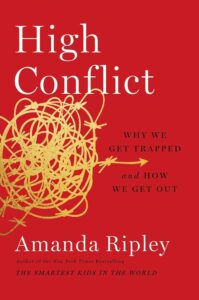
High Conflict: Why We Get Trapped and How We Get Out
Amanda Ripley (2021)
When we are baffled by the insanity of the “other side”— in our politics, at work, or at home — it’s because we aren’t seeing how the conflict itself has taken over. “High conflict” happens when discord distills into a good-vs-evil kind of feud, the kind with an us and a them. In this state, the normal rules of engagement no longer apply. The brain behaves differently; we feel increasingly certain of our own superiority and, at the same time, more and more mystified by the other side. Ripley investigates how good people get captured by high conflict — and how they break free.
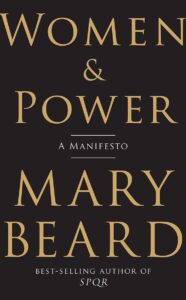
Women & Power: a Manifesto
Mary Beard (2017)
Beard addresses the misogynists and trolls who mercilessly attack and demean women the world over, including, very often, herself. Women & Power traces the origins of this misogyny to its ancient roots, examining the pitfalls of gender and the ways that history has mistreated strong women since time immemorial. As far back as Homer’s Odyssey, women have been prohibited from leadership in civic life, public speech being defined as inherently male. From Medusa to Philomela, from Hillary Clinton to Elizabeth Warren , Beard draws parallels between our cultural assumptions about women’s relationship to power and how powerful women provide a necessary example for all women who must resist being vacuumed into a male template.
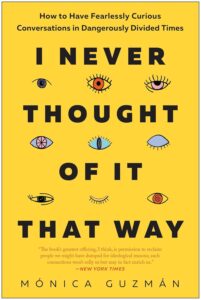
I Never Thought of It That Way: How to Have Fearlessly Curious Conversations in Dangerously Divided Times
Mónica Guzmán (2022)
When the country could no longer see straight across the political divide, Guzmán set out to find what was blinding us and discovered the most eye-opening tool we’re not using: our own built-in curiosity. Partisanship is up, trust is down, and our social media feeds make us sure we’re right and everyone else is ignorant (or worse). But avoiding one another is hurting our relationships and our society. This book takes you to the real front lines of a crisis that threatens to grind America to a halt — broken conversations among confounded people. Guzmán shows how to overcome the fear and certainty that surround us to finally do what only seems impossible: understand and even learn from people whose whole worldview is different from or even opposed to yours.

The Afterlife of Malcolm X: An Outcast Turned Icon's Enduring Impact on America
Mark Whitaker (2025)
Malcolm X has become an American icon, but when he was murdered in 1965, he was still seen as a dangerous outsider. White America found him alienating, mainstream African Americans found him divisive, and even his admirers found him bravely radical. It is more in death than his life that Malcolm’s influence has blossomed and come to leave a deep imprint on the cultural landscape of America. Whitaker tells the story of Malcolm X’s far-reaching posthumous legacy. He has been cited as a formative influence by both Barack Obama — who venerated Malcolm’s “unadorned insistence on respect” — and Clarence Thomas, who was drawn to Malcolm’s messages of self-improvement and economic self-help. Whitaker also retraces the long road to exoneration for two men wrongfully convicted of Malcolm’s murder, making this essential reading for anyone interested in true crime, politics, culture, and history.

The Exvangelicals: Loving, Living, and Leaving the White Evangelical Church
Sarah McCammon (2024)
Growing up in an evangelical family, McCammon was strictly taught to fear God and not question the faith. But she was increasingly plagued by fears and deep questions as the belief system she’d been carefully taught clashed with her expanding understanding of the world. McCammon also learned she was not alone, and was among a rising generation of evangelicals who are growing up and fleeing the fold, thinking for themselves, and deconstructing what feel like the “alternative facts” of their childhood. This is the story of the people who make up this generational tipping point, including the author. Part memoir, part investigative journalism, The Exvangelicals is the first definitive book to describe the post-evangelical movement: its origins, the stories of its members, and its vast cultural, social, and political impact.

Propaganda
Edward Bernays (2004; updated 2024)
Our world is dominated by political spin and media manipulation. Propaganda is essential for anyone who wants to understand how the ruling elite uses power. Discover the timeless strategies used to shape public opinion, straight from the father of public relations – Bernays was named one of the 100 most influential Americans of the 20th Century by Life magazine. His clients included the American Tobacco Company, several U.S. presidents, and the successful opponents of the Guatemalan revolution. Propaganda outlines how to influence attitudes and behaviors on a mass scale, without people realizing they are being manipulated.

Into the Bright Sunshine: Young Hubert Humphrey and the Fight for Civil Rights
Samuel G. Freedman (2023)
In 1948, the Democratic Party gathered in Philadelphia for its convention. Delegates’ most pressing issue was whether it would finally embrace civil rights in its official platform. Even under FDR, the party had dodged the issue to appease Southern segregationists. On the final day, Hubert Humphrey, then 37, urged delegates to “get out of the shadow of state’s rights and walk forthrightly into the bright sunshine of human rights.” To the surprise of many, delegates adopted a meaningful civil-rights plank. The act has shaped American politics to this day. Humphrey’s journey to that pivotal speech runs from a remote, all-white town in South Dakota to the mayoralty of Minneapolis as he tackles its notorious racism and anti-Semitism, to his role as a national champion of multiracial democracy.

The Psychology of Totalitarianism
Mattias Desmet (2022)
Totalitarianism is not a coincidence and does not form in a vacuum. It arises from a collective psychosis that has followed a predictable script throughout history, its formation gaining strength and speed with each generation as technology advances. Governments, mass media, and other mechanized forces use fear, loneliness, and isolation to demoralize populations and exert control, persuading large groups of people to act against their own interests, always with destructive results. Desmet deconstructs the societal conditions that allow this collective psychosis to take hold by looking at our current situation and identifying the phenomenon of “mass formation”―a type of collective hypnosis. Desmet offers a sharp critique of the cultural groupthink that exists throughout society. He cautions against the dangers of our current cultural landscape, media consumption, and reliance on manipulative technologies. Then he offers solutions to prevent the willing sacrifice of our freedoms.
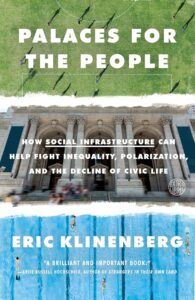
Palaces for the People: How Social Infrastructure Can Help Fight Inequality, Polarization, and the Decline of Civic Life
Eric Klinenberg (2019)
We are living in a time of deep divisions. Americans are sorting themselves along racial, religious, and cultural lines, leading to a level of polarization that the country hasn’t seen since the Civil War. Pundits and politicians are calling for us to come together and find common purpose. But how, exactly, can this be done? Palaces for the People suggests a way forward – that the future of democratic societies rests not simply on shared values but on shared spaces: the libraries, childcare centers, churches, and parks where crucial connections are formed. Interweaving his own research with examples from around the globe, Klinenberg shows how “social infrastructure” is helping to solve some of our most pressing societal challenges. Richly reported and ultimately uplifting, Palaces for the People offers a blueprint for bridging our seemingly unbridgeable divides.

Meet Me at the Library: A Place to Foster Social Connection and Promote Democracy
Shamichael Hallman (2024)
Libraries have a unique opportunity to bridge socioeconomic divides and rebuild trust. But in order to do so, they must be truly welcoming to all. They and their communities must work collaboratively to bridge socioeconomic divides through innovative and productive partnerships. Hallman presents a rich argument for seeing libraries as one of the nation’s greatest assets. He includes examples from libraries large and small – such as the North Liberty (Iowa) Library’s Lighthouse in the Library program to bring people together in a safe and supportive space, to Cambridge Cooks, at the Cambridge (Mass.) Public Library that fosters social connection by bringing people together over shared interest in food. Meet Me at the Library offers a revealing look at one of our most important civic institutions, and the social and civic impact they must play if we are to heal our divided nation.
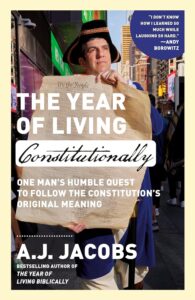
The Year of Living Constitutionally: One Man's Humble Quest to Follow the Constitution's Original Meaning
A.J. Jacobs (2025)

The Small and the Mighty: Twelve Unsung Americans Who Changed the Course of History
Sharon McMahon (2024)
Poverty, By America
Matthew Desmond (2024)
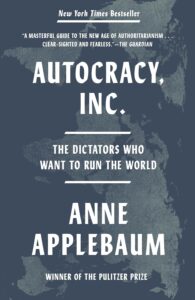
Autocracy, Inc.: The Dictators Who Want to Run the World
Anne Applebaum (2024)
We think we know what an autocratic state looks like, but in the 21st century, there is so much more to it. Nowadays, autocracies work together. Corrupt companies and kleptocrats in one country do business with corrupt companies and kleptocrats in another. The police in one country can arm and train the police in another, diplomats band together to bend international rules, and propagandists share resources and themes, pounding home the same messages about the weakness of democracy and the evil of America. The members of Autocracy, Inc., aren’t linked by a unifying ideology, like communism, that can be defeated, but by a common desire for power, wealth, and impunity. In this urgent treatise, Applebaum calls for the world’s democracies to fight a new kind of threat.
