
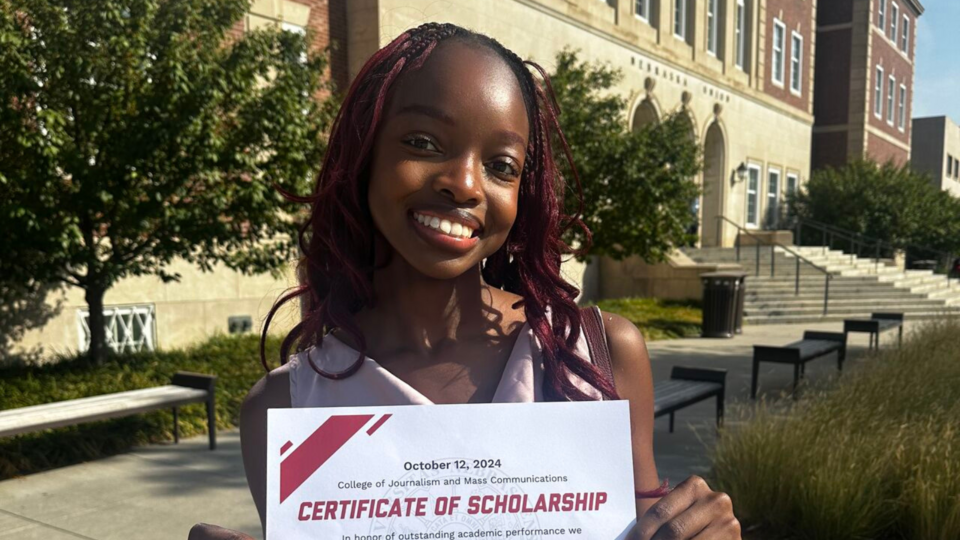
Linda Kuku remembers the split, her identity as a new American refracting through the space between the lives her parents had lived and the one she was embarking on from Grand Island, of all places. Of many places, at least, spanning Africa, the Middle East and North America.
“I definitely felt like I was one person at home, and I was one person at school. I even have my tribal name that my mom calls me — and that’s not my school name — so I literally had different names. It felt like stepping into a different world when I was at home versus at school. I felt that split, and that difference, even as a kid.” – Linda Kuku
Here, then, was the daughter of parents who fled civil war in their native Sudan, where their home region, the Nuba Mountains, had emerged as the epicenter of intense conflict. Linda herself had emerged to the world in an Egyptian refugee camp. She was 2 when her family won the lottery needed to enter the United States, when they moved to Stone Mountain, Georgia, an Atlanta suburb whose traffic and density ill-suited her mom. Nebraska? suggested a family friend from Sudan who had resettled in Grand Island.
Linda, then 5, would come to love Grand Island, home to dozens of Sudanese families living in community with Mexican and Guatemalan, among others. She would come to see her fellow Sudanese as aunts and uncles and cousins, blood relation or no. And still, the duality was real.
“It’s a very unique experience to feel that split personality and feel like you’re different people at different times,” she said, “that you can only show different parts of yourself at different times.”
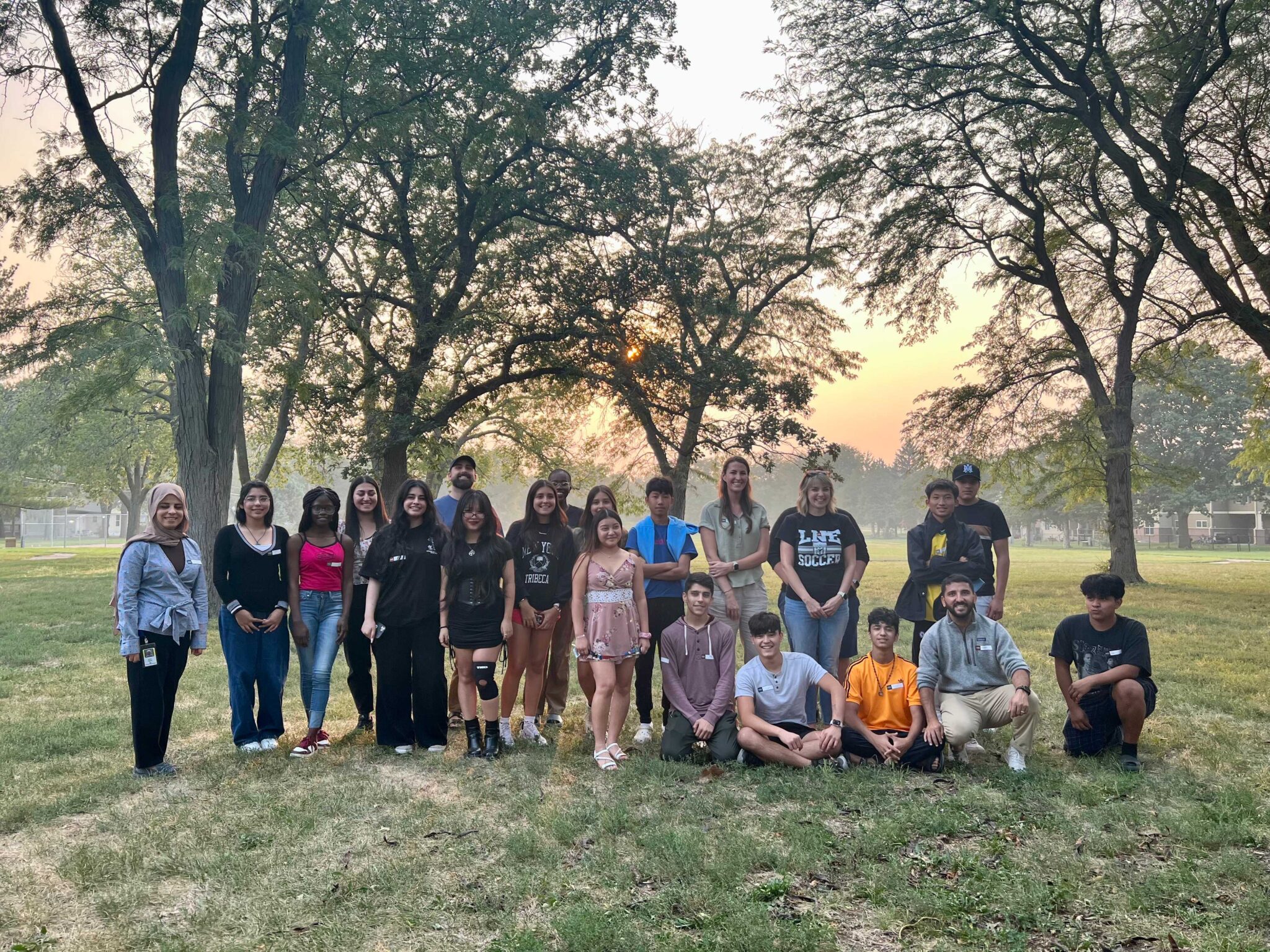
Linda is now bringing that lived experience to bear as coordinator of the New American Youth Leadership Academy, a Civic Nebraska program launched in fall 2023 at Lincoln High and Lincoln Northeast. Some of the sophomore students who have joined NAYLA are refugees, too. Nearly all are first-gen Americans who have contended, are contending, with what often feels like tension between heritage and acculturation.
“When you’re doing that split, it’s very hard to say, ‘This is who I am.’ I’m a Sudanese woman, and I’m not afraid to step into that,” said Linda, who attended Lincoln North Star. “But sometimes I feel like people are just trying to fit in so much that it’s very easy to lose yourself in that, especially at a young age. So I want them to feel empowered in their identity.”
In weekly NAYLA meetings, Linda shows the students an alternative to living in two worlds: merging them, not by subtracting from either but by adding what’s beloved from both. She kicked off the school year by asking the NAYLA students to present on that question central to all youth, even more so immigrant youth: “Who am I?” When modeling the exercise for the students, Linda spoke to the many forms her own identity takes, from what she eats to the languages she hears when with family: some English, sure, but also Arabic and a Sudanese tribal language from her elders, including her grandmother.
“I feel like we all kind of relaxed, learning about each other, learning about similarities,” she said of the presentations. “‘Oh, your culture eats that? We eat something similar!’ So that’s always really cool, to be able to share that. And that’s a big part of trying to build community through NAYLA, too: showing how similar we are, and learning from our differences, too.”
Joaquim Tapimo, a soon-to-be junior at Lincoln High with a penchant for math and history, echoed Linda’s experience of cultural dissonance on arriving from Cameroon as a 6-year-old. He decided to give NAYLA a shot, he said, after meeting and talking with her.
“It basically inspired me,” he said, “because I saw another person who looked like me, and was an immigrant like me, who was leading a club that was aimed to promote and help people who are immigrants.
“It just shows that there are people like me who are actually doing great — and took the steps that I’m taking right now to become as great as they are.”
Among those steps? Learning to network, write a résumé and complete an application, all of which Joaquim cited as vital in his quest to attend college. The networking is more than just a lesson: The Nebraska Press Association, for instance, has encouraged NAYLA students to submit essays for inclusion in an anthology on the refugee and immigrant experiences of Nebraskans. Workshops on writing for that anthology have been led by Michelle Hassler, professor emeritus of journalism at the University of Nebraska–Lincoln — and the instructor for a reporting class taken by Linda.
“She’s critiqued my writing,” Linda said, laughing, “so I was like, ‘I know she’s legit.’
“Now, Michelle is going to be a connection for them. That’s something I feel really exemplifies what we’re trying to do here, the kind of opportunities we want to give NAYLA students.”
Having just wrapped up her own semester at Nebraska U, having graduated with a bachelor’s in broadcasting, Linda said she’s already looking ahead to NAYLA’s future.
“I’m just really excited for the next year,” she said, “to see this expand and grow, to see how much more we can do, how much more impact we can have.”
